Is your day constantly interrupted by frustrating computer glitches and slow systems? For many Canadian business owners, unreliable technology isn’t just an annoyance-it’s a major barrier to productivity, leading to costly downtime and security worries. If you spend more time troubleshooting IT issues than focusing on growth, you’re not alone. The solution to ending these tech headaches for good is finding a professional it service provider who can manage your entire technology infrastructure, proactively and reliably.
This guide is here to provide clarity and put you back in control. In plain English-no geek-speak, we promise-we’ll explain exactly what an IT service provider does, the critical services they offer, and how to choose the right partner for your business. Get ready to achieve true peace of mind and finally turn your technology into a tool that helps you grow, not a problem that holds you back.
What Exactly Is an IT Service Provider?
Tired of technology headaches that pull you away from running your business? In simple, no-geek-speak terms, an it service provider is an external company that acts as your dedicated technology department. Their primary role is to proactively manage all your business’s IT needs-from computers and networks to cybersecurity and cloud services-for a predictable, flat monthly fee.
Unlike a single in-house IT person who can be quickly overwhelmed or a freelance “IT guy” who only shows up when something breaks, a provider gives you access to an entire team of certified experts. This professional approach, often guided by the principles of IT service management (ITSM), ensures your technology is reliable and secure. Ultimately, they become a strategic partner, working to align your technology with your business goals to help you grow efficiently and put an end to frustrating computer problems finally and forever.
Beyond Fixing Computers: The Modern Role of IT Providers
The role of an IT provider has evolved far beyond just fixing what’s broken. Instead of reacting to problems, a modern provider works proactively to prevent them from ever happening. They focus on aligning your technology with your long-term business objectives, ensuring your IT investments drive real growth and productivity. This includes managing critical areas like cybersecurity, business data protection, and cloud infrastructure, while also providing guidance on emerging technologies like AI to keep your Canadian business competitive.
Key Acronyms Explained: MSP, MSSP, and More
You’ll likely encounter a few acronyms when searching for support. Here’s a simple breakdown in plain English:
- MSP (Managed Service Provider): This is the most common proactive model. An MSP manages your entire IT infrastructure for a flat monthly fee, focusing on preventing downtime and optimizing performance.
- MSSP (Managed Security Service Provider): This is a specialist MSP that focuses exclusively on cybersecurity. They provide advanced services like 24/7 threat monitoring, detection, and incident response to keep your business safe.
- Break-Fix: The traditional, reactive model. You call for help only when something is broken and pay by the hour. This often leads to more costly downtime and unpredictable expenses.
The term it service provider is a broad umbrella that can include all of these. The key is finding a partner whose service model provides the peace of mind and strategic guidance your business deserves.
The Core Services Offered by IT Service Providers
So, what does an IT service provider actually do? It’s much more than just fixing a broken computer. A true technology partner offers a complete suite of services designed to manage every aspect of your business technology, giving you the peace of mind to focus on what you do best. While offerings are often bundled into convenient packages, a quality provider will tailor them to fit the unique needs and budget of your business. The ultimate goal is to provide comprehensive, stress-free tech management.
Here are the four core pillars of service you can expect:
Managed IT Services: Your Proactive IT Department
Think of this as having a dedicated IT department without the C$-level payroll costs. Instead of waiting for something to break, managed services focus on preventing issues before they can cause costly downtime. This proactive approach is one of the key hallmarks of a great managed service provider, as it turns unpredictable IT expenses into a stable, monthly investment. This typically includes 24/7 monitoring, routine maintenance and software patching, and responsive it support for your team.
Cybersecurity Services: Protecting Your Digital Assets
In today’s digital landscape, a single breach can be devastating. A core function of any reputable it service provider is building a robust defence for your data and network. This is a multi-layered strategy that goes beyond simple antivirus software. It includes implementing and managing powerful firewalls, providing employee security awareness training to spot phishing scams, and creating critical data backup and disaster recovery plans to ensure your business can get back on its feet quickly after any incident.
Cloud Solutions: Modernizing Your Infrastructure
Is your team working from multiple locations? Cloud solutions are the engine of the modern, flexible workplace. Your provider can manage the entire process, from migrating your operations to secure and efficient platforms like Microsoft 365 to managing cloud servers and storage. This ensures your data is accessible, protected, and optimized, empowering your team to be productive whether they are in the office, at home, or on the road.
IT Consulting and Strategy: Your Virtual CIO
Beyond day-to-day support, a great provider acts as your strategic technology advisor, or Virtual CIO (vCIO). They help you see the big picture by assisting with long-term IT budgeting, planning for future growth, and navigating complex Canadian compliance regulations like PIPEDA. This high-level guidance ensures your technology investments are not just costs, but strategic assets that directly support your business goals.
Key Business Models: Managed Services vs. Break-Fix
When you partner with an IT service provider, the single most critical difference lies in their business model. How they operate and bill for their services directly impacts your budget, system reliability, and overall business continuity. The choice boils down to one fundamental question: do you want proactive prevention or reactive repair?
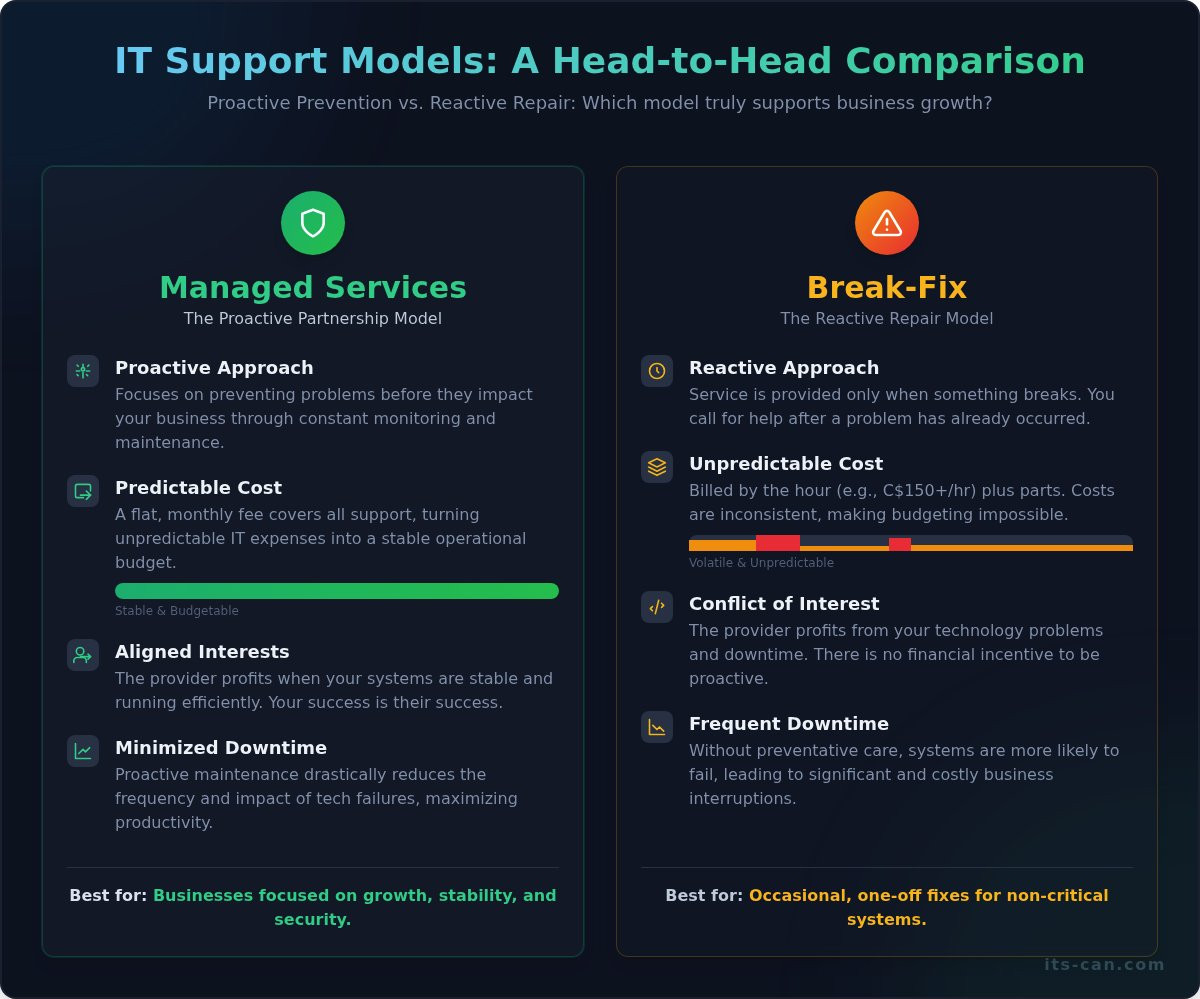
Think of it like this: a Managed Services plan is like a gym membership. You pay a consistent fee to maintain your health and prevent problems. The Break-Fix model is like only paying for emergency room visits-you wait for a crisis, and then pay a premium to fix it.
The Break-Fix Model: Pay-As-You-Go Support
This is the traditional, reactive approach. When a computer crashes or your network goes down, you call for help. A technician is dispatched, and you receive a bill for their time and any parts used. While it might seem cheaper because there’s no monthly contract, this model is full of hidden costs. You face unpredictable expenses, often with emergency call-out rates of C$150 per hour or more. Crucially, the provider only profits when you have problems, creating a fundamental conflict of interest that leads to more downtime and frustration for your business.
The Managed Services Model: A Proactive Partnership
A modern it service provider operating on a managed services model acts as your long-term technology partner. For a flat, predictable monthly fee, they take full responsibility for your IT environment. Their goal is the same as yours: to keep your technology running smoothly and securely to maximize uptime. This proactive approach aligns their success with yours-the fewer problems you have, the more efficient their business becomes.
A comprehensive managed services plan typically includes:
- 24/7 Proactive Monitoring: Identifying and fixing issues before they cause downtime.
- Ongoing Maintenance: Keeping systems updated, patched, and optimized.
- Robust Cybersecurity: Protecting your data from threats with advanced tools.
- Unlimited Support: Peace of mind knowing help is always available without an extra charge.
Why Most Modern Businesses Choose Managed Services
Today’s businesses can’t afford to wait for things to break. The cost of downtime-in lost productivity, sales, and reputation-far exceeds the cost of proactive maintenance. By choosing a managed services partner, you reduce your overall IT spending by preventing expensive emergencies. You gain access to a full team of experts for less than the salary of a single in-house IT employee, allowing you and your team to stop putting out tech fires and focus on growing your business. See how our managed services can give you peace of mind.
Signs Your Business Is Ready for an IT Service Provider
Many businesses wait for a full-blown IT crisis-a server crash, a data breach, or a system-wide outage-before seeking professional help. This reactive approach is not only stressful but also incredibly expensive. Being proactive and recognizing the early warning signs can save your business from costly downtime and disaster.
Think of this section as a quick self-assessment. If several of the following points sound painfully familiar, it’s a clear signal that it’s time to partner with an expert it service provider.
You’re Experiencing Frequent Downtime and Tech Issues
Are your days filled with constant tech headaches instead of focusing on your customers? This is one of the most common signs that your current IT support-whether it’s a single staff member or a break-fix contractor-is overwhelmed. Consider if you’re facing:
- Constant complaints from employees about slow computers, lagging network speeds, or glitchy software.
- Recurring problems that are never permanently fixed, forcing your team to rely on temporary workarounds.
- Lost revenue or productivity because your systems were down when you and your customers needed them most.
- An “IT guy” who can no longer keep up with the volume of support tickets and requests.
You Have Growing Security or Data Compliance Concerns
In today’s digital landscape, a “hope for the best” security strategy is a recipe for disaster. If you handle sensitive client or financial information, you have a legal and ethical responsibility to protect it. You need an expert if:
- You are not 100% confident your business is protected from modern cyber threats like ransomware and phishing attacks.
- You handle sensitive customer data but worry about the potential for a costly data breach.
- Your industry has specific data protection regulations (like PIPEDA in Canada) and you’re unsure if you are fully compliant.
- You lack a tested, reliable data backup and disaster recovery plan to get your business back online quickly after an emergency.
Your Business is Growing or Changing
Growth is exciting, but it puts immense strain on your technology. The IT infrastructure that worked for a 5-person startup will quickly become a liability for a 20-person operation. It’s time to think strategically if:
- You are hiring more employees and need to onboard them efficiently and securely, especially with remote or hybrid staff.
- You plan to adopt new software, migrate to the cloud, or implement other major technology changes.
- Your current technology feels outdated and is creating frustrating bottlenecks instead of improving efficiency.
- You lack a clear, strategic IT roadmap that aligns with your business goals for the next 1-3 years.
If these challenges resonate with you, it’s not a cause for panic-it’s a sign of opportunity. You’re ready to move from reactive fire-fighting to proactive, stress-free IT management. Recognizing the problem is the first step; the next is to find a partner to solve your IT nightmares once and for all.
How to Choose the Right IT Service Provider for Your Business
Choosing an IT service provider is one of the most critical decisions for your business’s stability and growth. This isn’t about finding the cheapest vendor; it’s about hiring a long-term technology partner who is invested in your success. The right partner will eliminate IT frustrations, protect your data, and help you focus on what you do best. Use this checklist to ask the right questions during your search. A trustworthy provider will be transparent and answer them with confidence.
Evaluate Their Technical Expertise and Local Presence
Does the provider have proven experience with businesses in your industry here in Canada? Ask about their team’s certifications (such as Microsoft, CompTIA, or Cisco) and their official partnerships with major technology vendors. While remote support is essential, having a local team that can provide fast, on-site assistance when a critical server fails is invaluable for true peace of mind.
Understand Their Service Level Agreement (SLA)
An SLA is their written promise to you, and it should be in plain English. It must clearly define their commitments, leaving no room for ambiguity. Before signing, make sure you know:
- What are their guaranteed response times for critical, high, and low-priority issues?
- How do they handle after-hours or weekend emergencies?
- What are their standard hours for help desk support?
- Is every detail documented in the contract?
Check Client Testimonials and Reviews
What are their current clients saying about them? A reputable it service provider will be happy to provide references from other Canadian businesses similar in size to yours. Check their Google Reviews and other online ratings for unbiased feedback. A history of long-term client relationships is one of the strongest indicators of consistent, high-quality service.
Assess Their Onboarding Process and Strategic Approach
A proactive partner has a clear plan for your success from day one. Ask how they will manage the transition from your current setup and if they perform a comprehensive initial network assessment to identify hidden risks. The best providers will assign you a dedicated account manager or virtual CIO (vCIO) to provide ongoing strategic guidance, ensuring your technology always aligns with your business goals.
Ready to find a partner who checks all these boxes? Book a free, no-obligation consultation to discuss your needs.
Your Next Step: From IT Frustration to Business Growth
Navigating the world of technology support is a critical decision for any Canadian business. You now have the clarity to move beyond the costly, reactive break-fix model and understand the immense value of proactive managed services. Choosing the right it service provider isn’t just about outsourcing tasks; it’s about gaining a strategic partner dedicated to preventing problems, securing your data, and freeing you to focus on what you do best: growing your business.
If you’re ready for a change, consider what a true partnership looks like. It means getting a real person on the line with an average help desk answer time of just one minute. It means receiving clear, straightforward advice thanks to our No Geek-Speak Promise. And it means total confidence in your IT, backed by our 100% Satisfaction Guarantee. This is the peace of mind we deliver every day.
It’s time to get the reliable, stress-free technology support your business deserves. End your IT frustrations finally and forever. Book a free consult today.
Frequently Asked Questions About IT Service Providers
What is the difference between an IT service provider and a Managed Service Provider (MSP)?
The term it service provider is a broad category for any company that handles IT tasks. A Managed Service Provider (MSP), however, is a specific type that proactively manages your entire IT environment for a flat monthly fee. This modern, proactive approach focuses on preventing problems before they cause costly downtime, a significant shift from the old “break-fix” model of calling for help only when something is already broken.
How much do IT service providers cost for a small business?
For a small business in Canada, costs typically range from C$75 to C$150 per user, per month. This predictable fee often covers proactive monitoring, helpdesk support, security updates, and data backup. This model eliminates surprise bills and makes budgeting for reliable it support straightforward, allowing you to focus on your business instead of worrying about unexpected tech expenses and costly downtime.
Are my company’s sensitive data and information safe with a third-party provider?
Absolutely. A professional provider prioritizes your data’s security above all else. They use advanced security tools like firewalls, encryption, and multi-factor authentication to keep you protected. Reputable Canadian providers are compliant with privacy laws like PIPEDA and will have strict confidentiality clauses in their service agreements. This ensures your sensitive client and company information is always protected against cyber threats, giving you complete peace of mind.
What happens if I have an urgent IT problem outside of business hours?
IT problems don’t stick to a 9-to-5 schedule, and neither should your support. Most providers offer 24/7/365 support for critical emergencies. This means if your server goes down on a Saturday night, you have an expert team ready to respond immediately. This ensures business continuity and minimizes costly downtime, no matter when an issue strikes. Always confirm the after-hours support specifics in your service level agreement (SLA).
We are a very small business. Are we too small to need an IT service provider?
This is a common concern, but no business is too small to be a target for cyberattacks or to suffer from productivity-killing downtime. In fact, smaller businesses can be more vulnerable. A good IT partner offers scalable plans designed for businesses of all sizes, providing enterprise-level security and support that you couldn’t affordably build in-house. It’s about proactively protecting your business and ensuring technology helps you grow, not holds you back.
What is the typical length of a contract with an IT service provider?
Contract lengths can vary, but the industry standard is typically a one, two, or three-year agreement, with longer terms often providing better pricing. However, some providers offer more flexible options, including month-to-month contracts, especially for smaller businesses or those new to outsourcing. It’s crucial to find a partner who is confident enough in their service to offer terms that provide you with both stability and flexibility.